
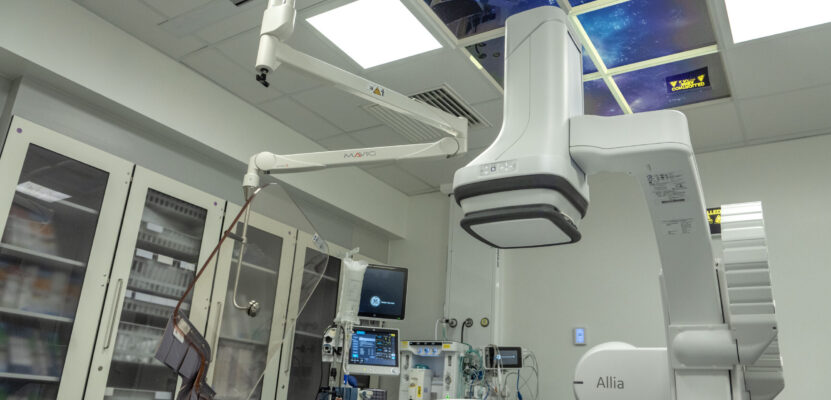
A new, state-of-the-art cardiac catheterisation laboratory (cath lab) has recently been developed at Lister Hospital, marking a significant investment in modernising cardiac care for patients across Hertfordshire.
Cath labs are specialised clinical areas used to diagnose and treat heart conditions using minimally invasive techniques. The investment ensures patients benefit from fully modernised, industry-standard facility equipped with top-of-the-range imaging technology that provides clearer images while using lower doses of radiation.
At Lister, the labs support the invasive cardiology service, including a 24-hour, seven-day-a-week Primary Percutaneous Coronary Intervention (PPCI) service for patients experiencing heart attacks.
During these emergency procedures, specialist teams work quickly to reopen blocked coronary arteries and restore blood flow to the heart muscle – significantly improving outcomes for patients.
Athina Chasapi, Clinical Director for Cardiology said:
“This new cath lab is a significant step forward for our cardiac services.
“It provides a modern, purpose-built environment with the latest imaging technology, allowing us to deliver both emergency and planned procedures more effectively
“For patients, this means faster access to life-saving treatment and an improved overall experience. For our teams, it creates a safer, more efficient space to deliver high-quality care, 24-hours a day.”
The investment means more planned procedures such as stent insertion – where small metal tubes are placed in narrowed or blocked arteries to improve blood flow – and implantation of pacemakers can take place.
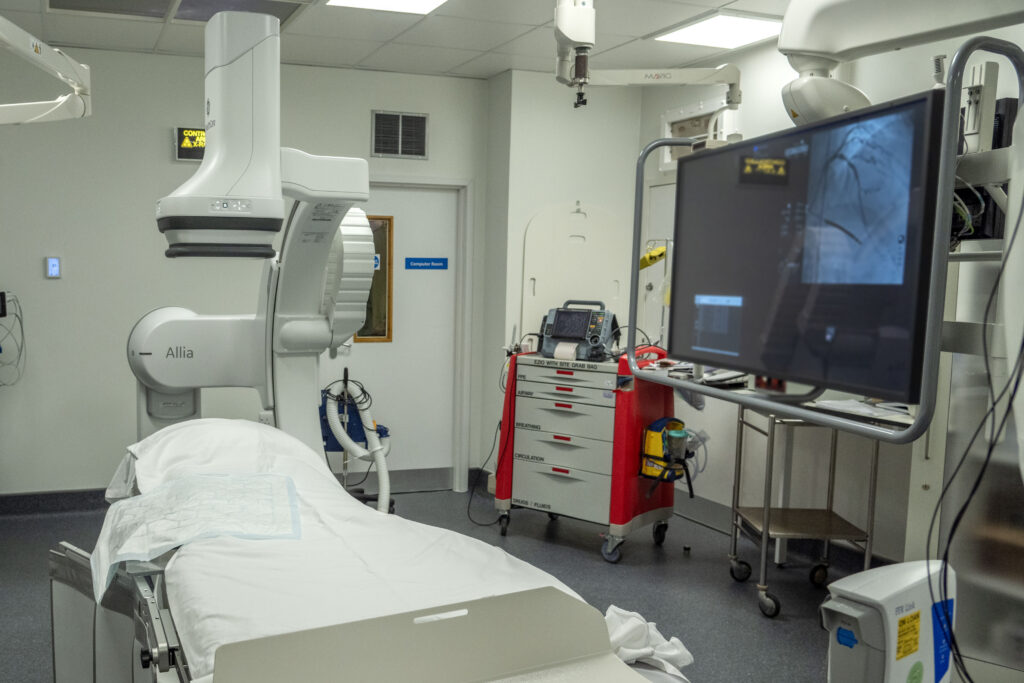
The new lab will be used for both emergency and planned procedures, benefiting a wide-range of patients across the county who require X-ray-guided cardiac care.
Michelle Irvine, Lead Cardiac Physiologist said:
“The new cath lab supports a smoother patient pathway, from arrival through to recovery.
“It allows us to work more efficiently as a team and helps ensure patients can be treated and discharged home as quickly and safely as possible.”
This development follows the replacement of a second cath lab in 2023, ensuring both facilities meet current standards and are equipped to support a rising demand for cardiac care.


