
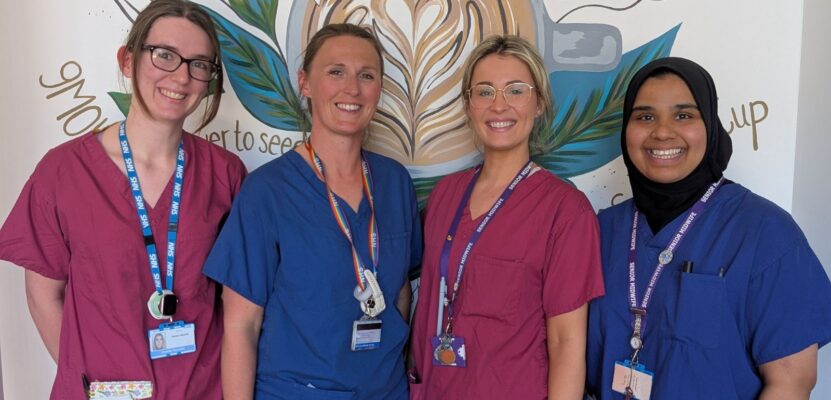
At East and North Hertfordshire Teaching NHS Trust, our midwives continue to go above and beyond to support women and their new-borns, as well as each other.
What is International Day of the Midwife?
International Day of the Midwife is an annual event that celebrates midwives and their vital role in ensuring safe childbirth and maternal care. Midwives provide comprehensive care during pregnancy, childbirth, and the postpartum period, offering support, education, and medical expertise. This day also highlights the importance of midwifery in promoting healthy pregnancies, empowering women to make informed choices about their care, and ensuring that all women have access to skilled midwives.
Midwives carry out a huge variety of roles to ensure the safety of women and children. We highlight some of these below.
A Bereavement or Rainbow Midwife is a specialist midwife who provides dedicated care and support to families who experience pregnancy loss and to those who go on to become pregnant again after loss
A Preterm Birth Specialist Midwife is a senior midwife focused on identifying, monitoring, and supporting women at high risk of giving birth before 37 weeks. They work within multidisciplinary teams (MDT) to provide tailored antenatal care, including cervical length screenings, personalised birth planning, and interventions to prevent premature labour.
A Consultant Midwife is the highest clinical career point in midwifery. They provide specialised care for complex pregnancies, promote normal birth, and drive service improvements through education, audit and research.
A Professional Midwifery Advocate works to advocate for midwives to ensure that their voice is heard within the work environment. This includes supporting with Quality improvement, risk management, restorative clinical supervision and training and revalidation.
A Midwifery Ward Manager is a senior clinical leader responsible for the 24-hour operational management, safety, and quality of care within a maternity unit, such as a delivery suite or antenatal/postnatal ward. They combine expert clinical skills with staff management, rostering, and budget control.


